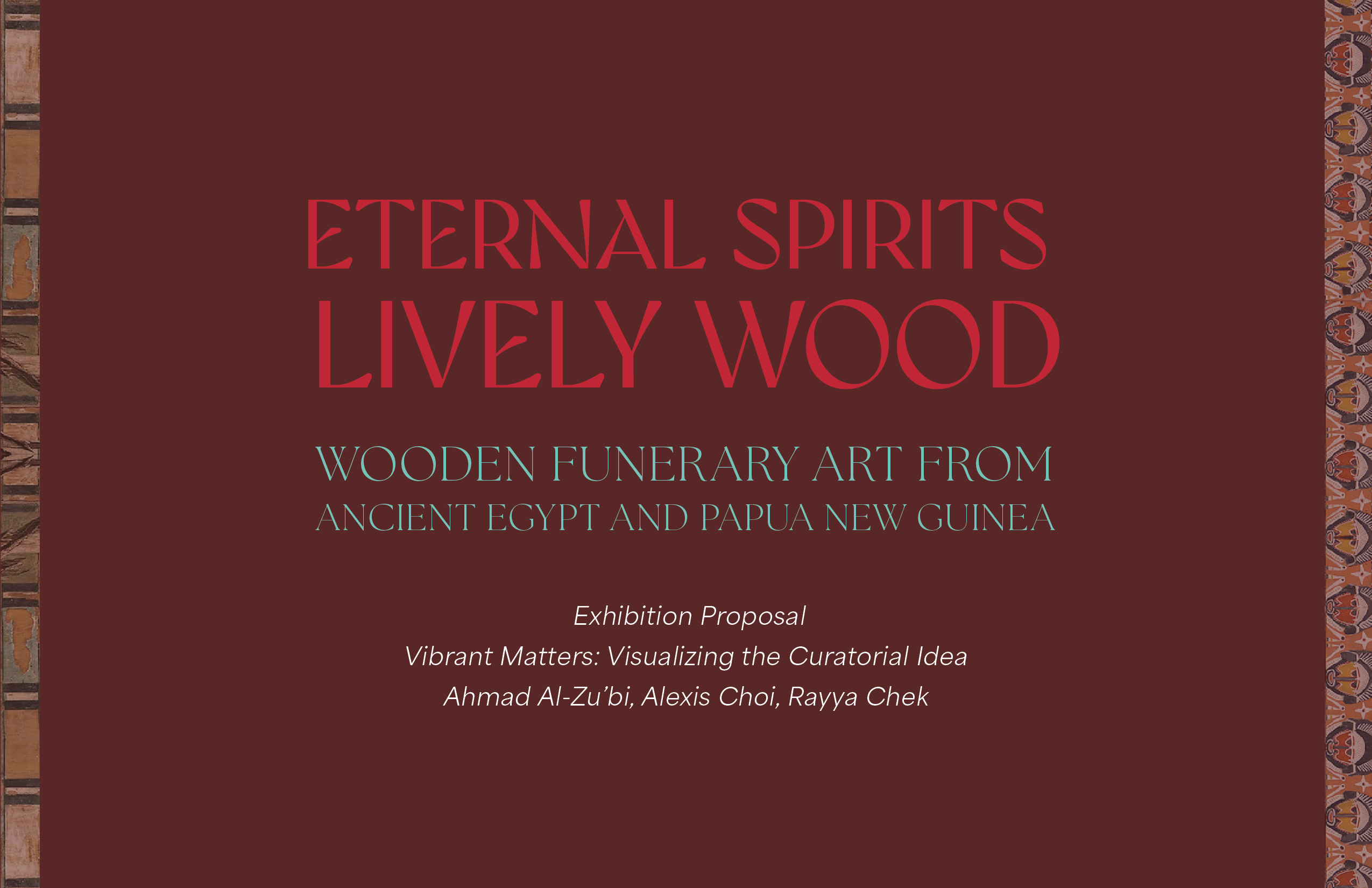
The proposal is built on a vast conceptualization of death and afterlife through art, comparing and constrasting how two separate societies choose to embody this concept in forms of funerary works.
The selected objects were considered based on their origins and materials. Though the two regions had never interacted with one another due to distance and time period. The objects are all made from wood, and serves a function that relates to the afterlife through funerary or ancestral vessels.


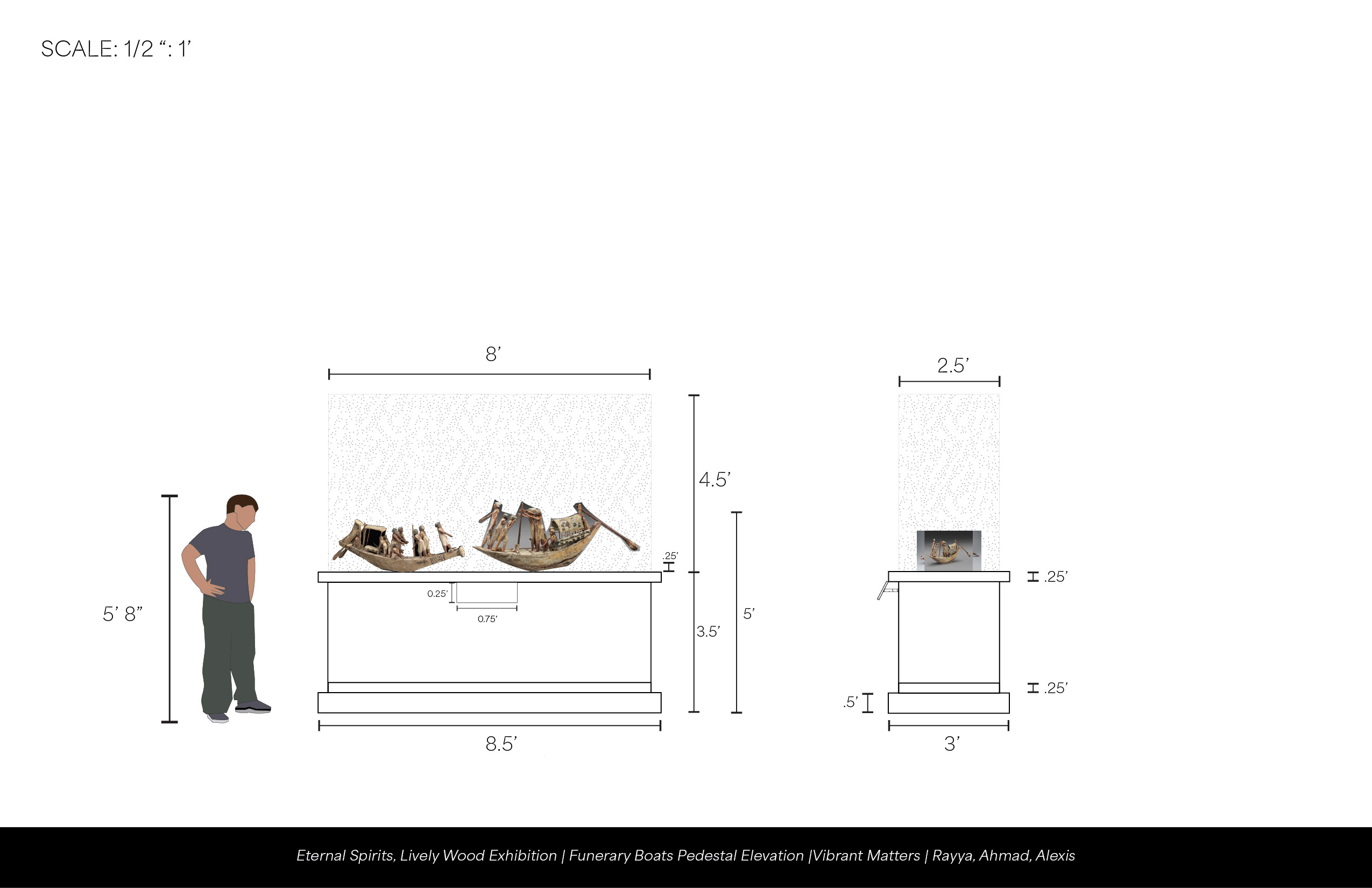
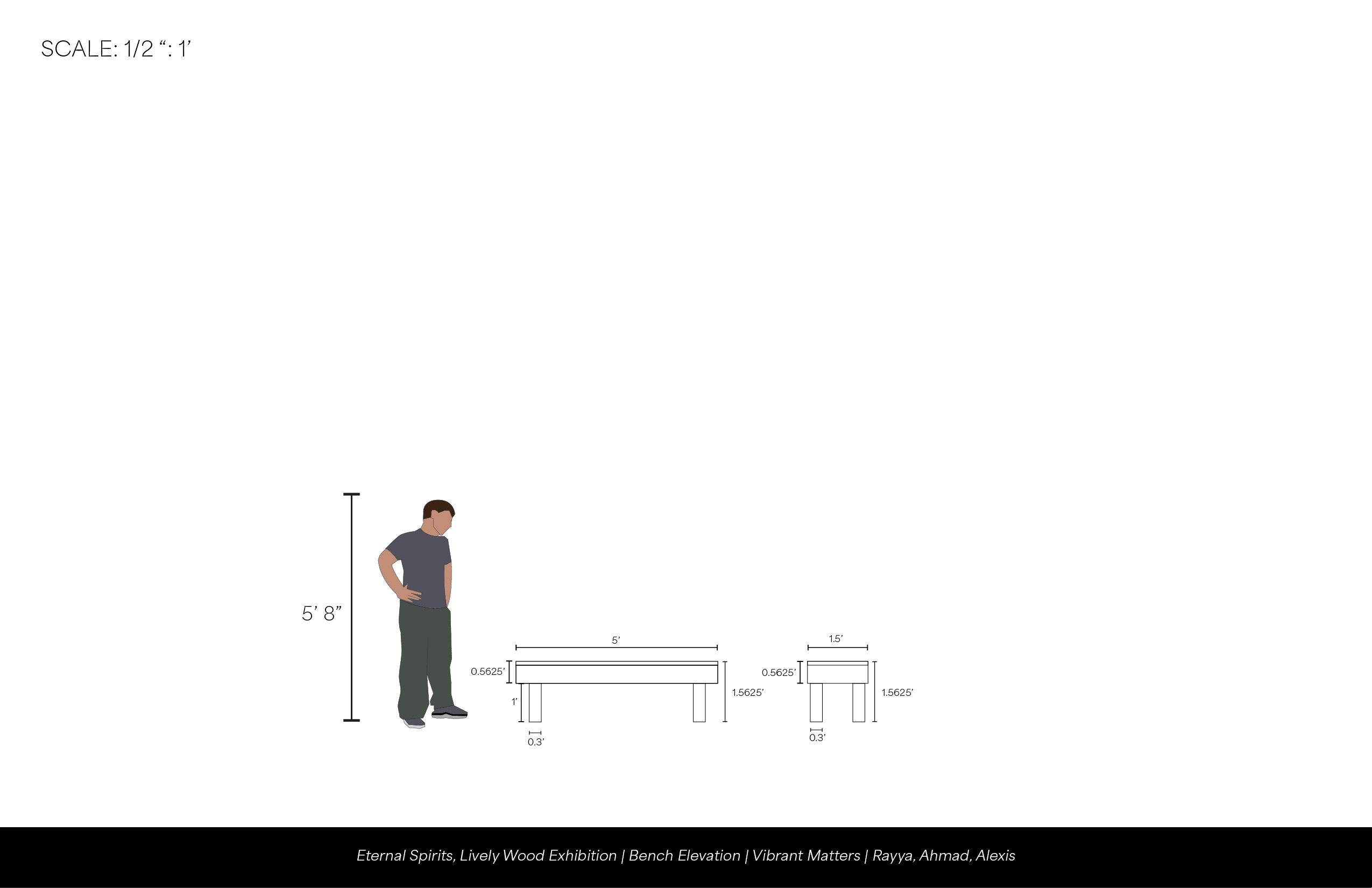
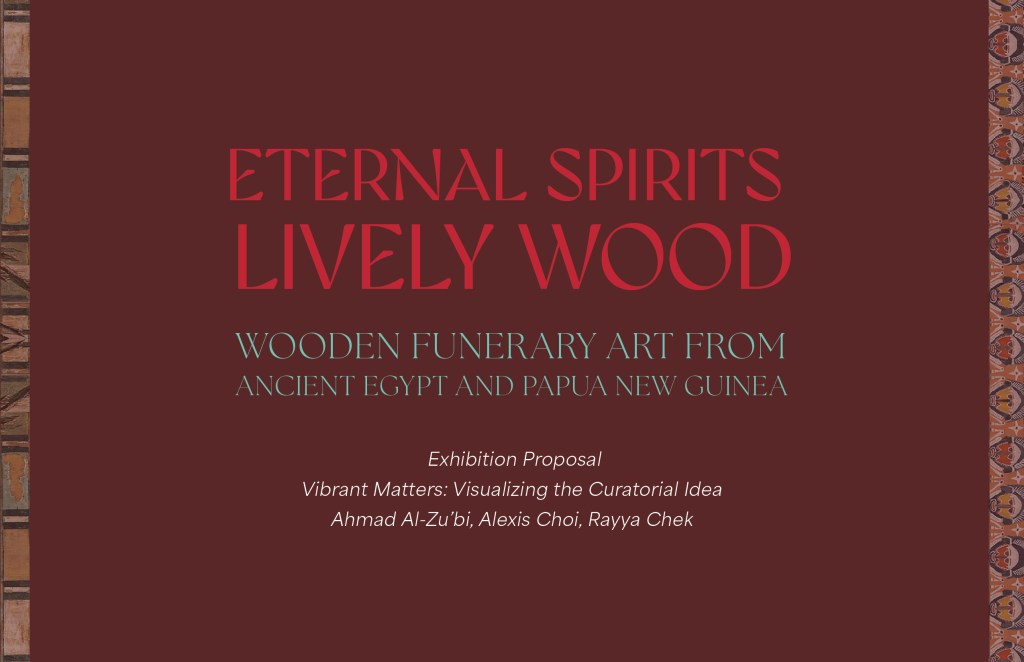
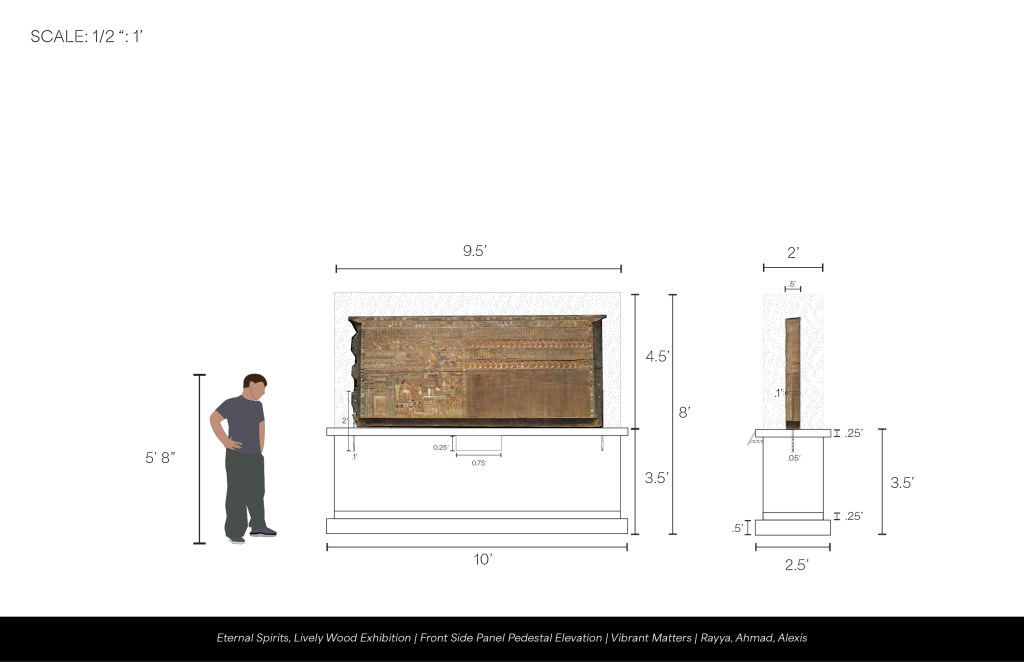
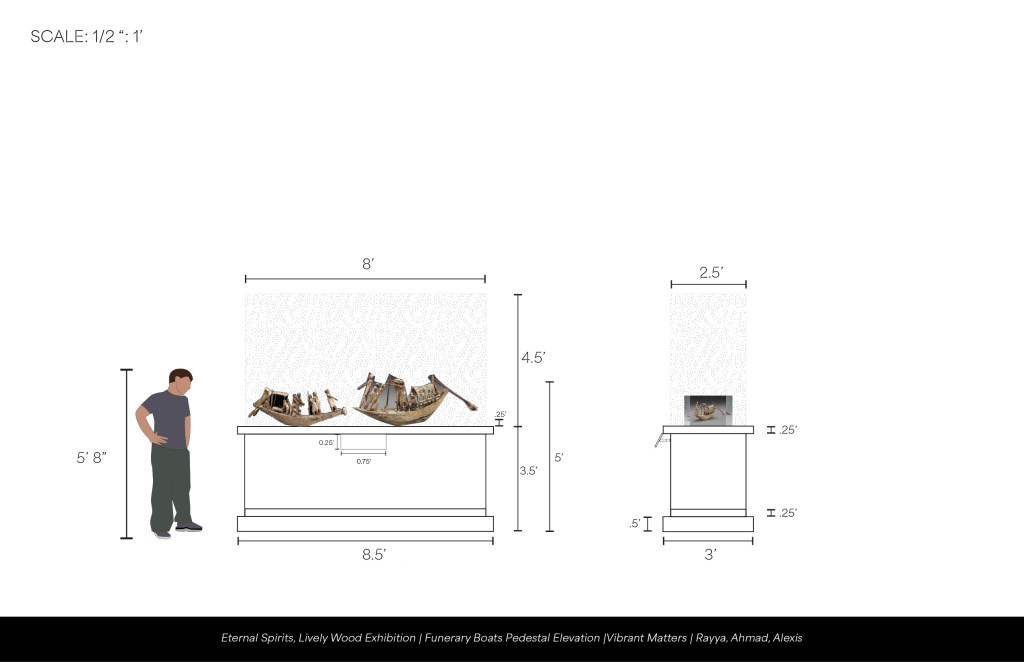
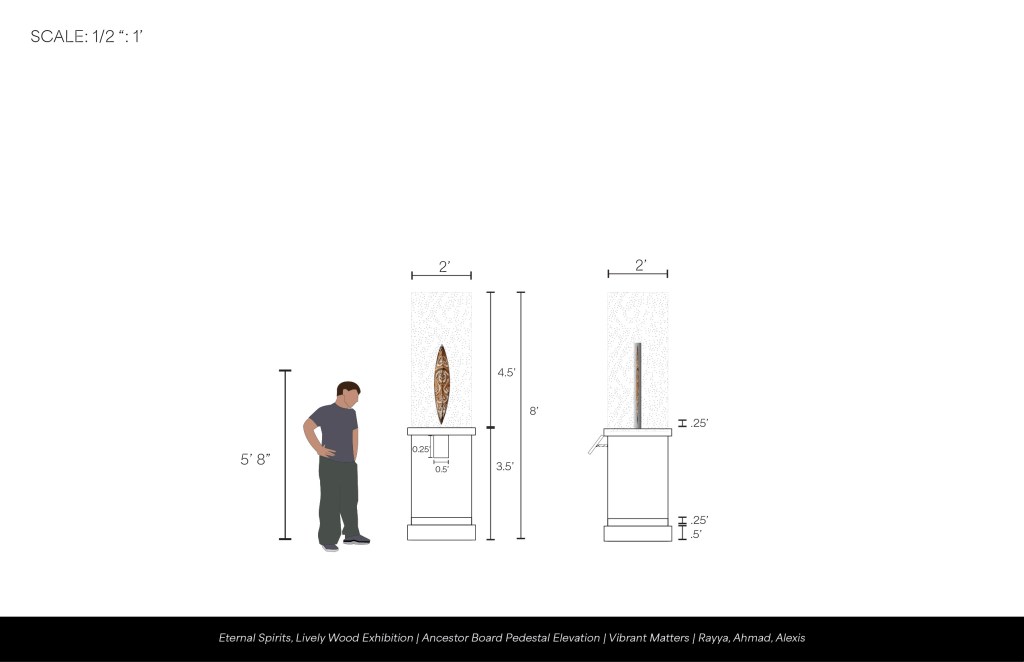
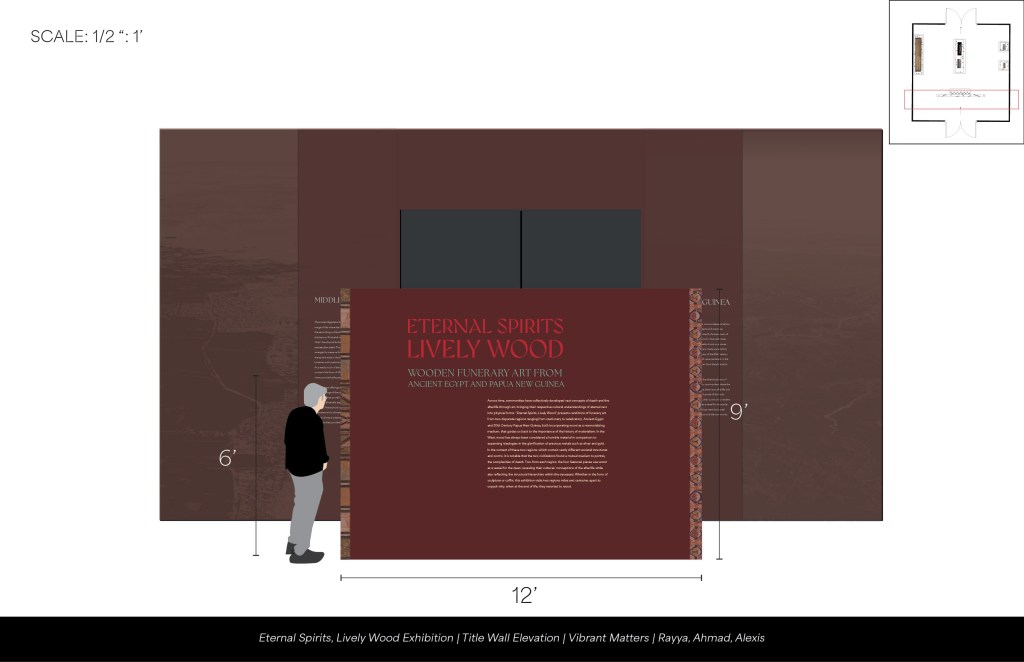
I acted as the lead designer, responsible for the title wall and exhibition proposal graphic. In addition, I worked on the measurements and design of the artifact pedestals.
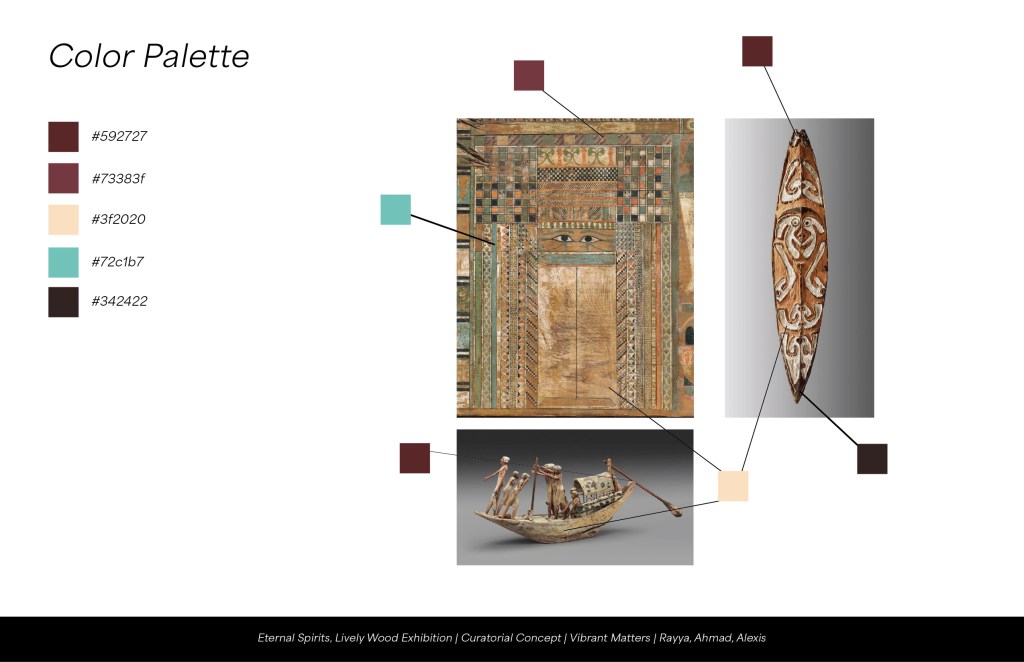
The color palette were selected based on similar colors present within the the artifacts. Initially, we observed similarities of colors in their flags however, we felt that the connection was not as strong enough because the connections was formed from modern flags.
We furthered our investigation, choosing to examine the artifacts and related pieces.



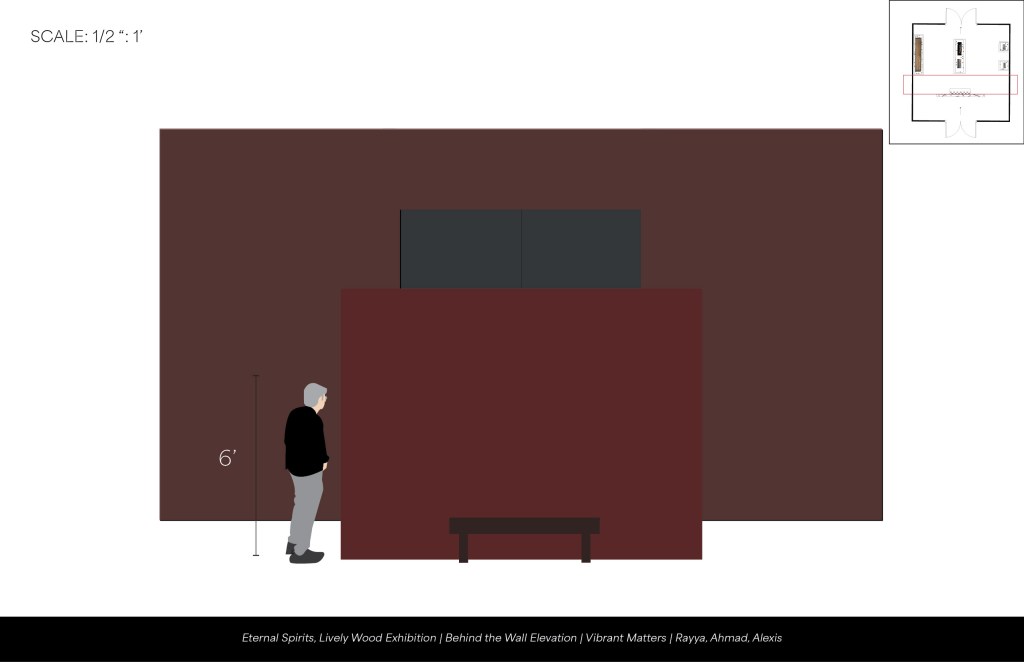
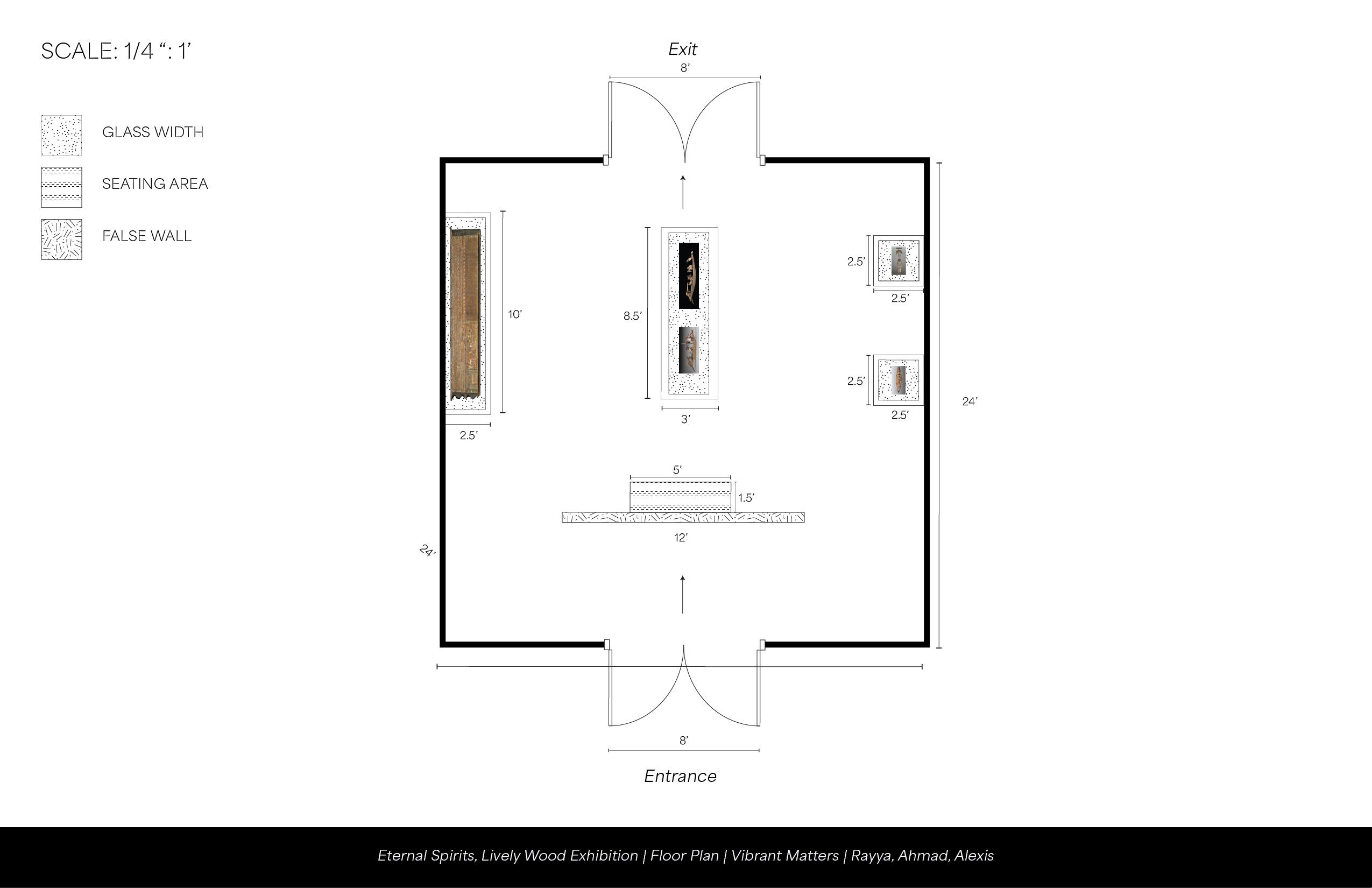
The floor plan is designed to separate the room in two distinct areas, providing the viewer two choices.
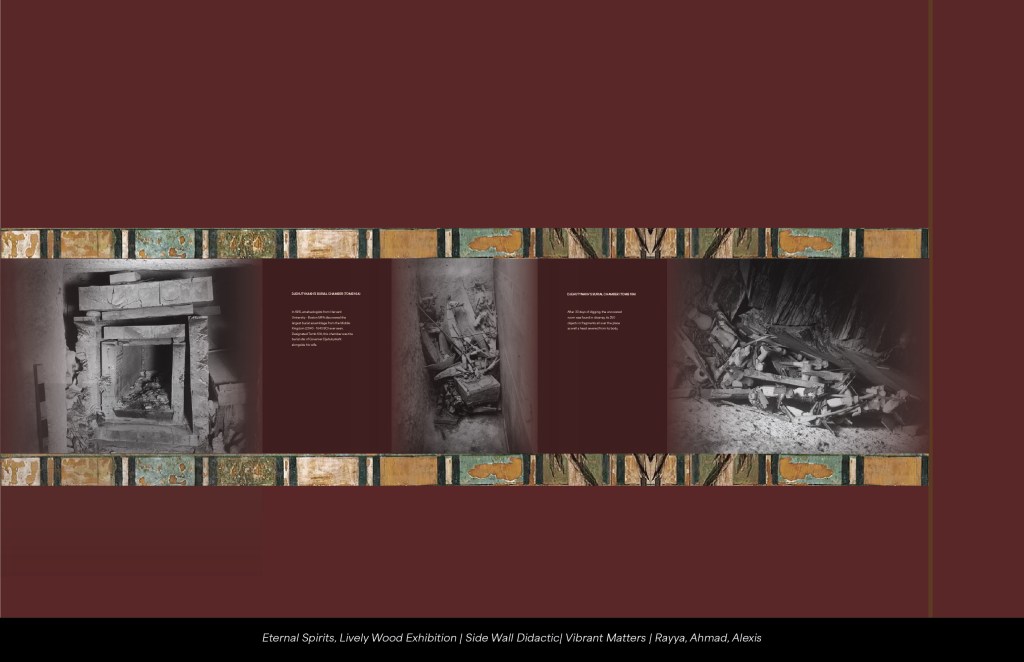
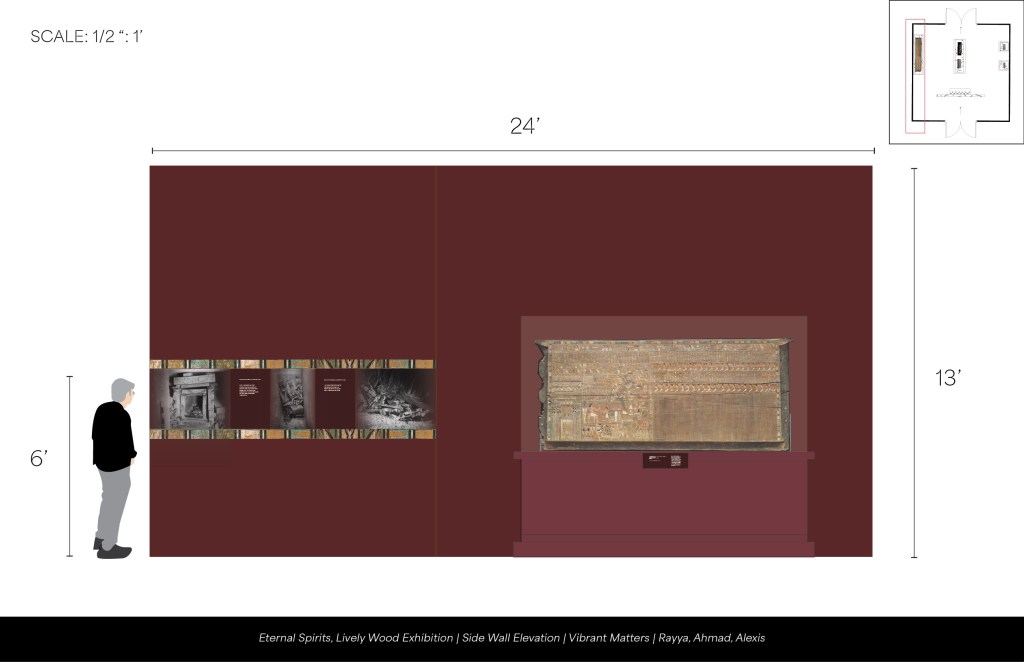
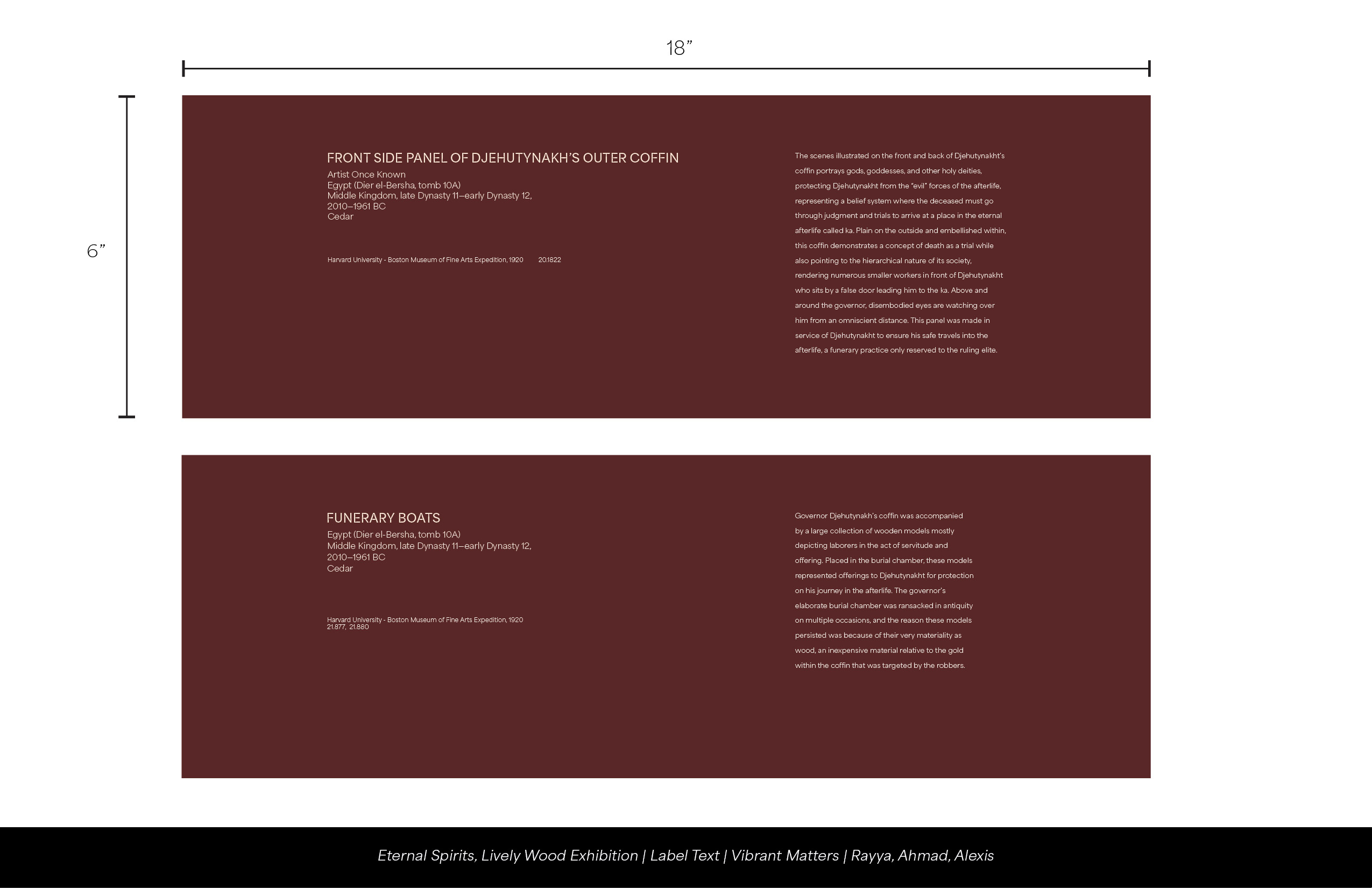
If you choose to follow the left path, the side wall didactic reveals the site of where the outer coffin was founded.
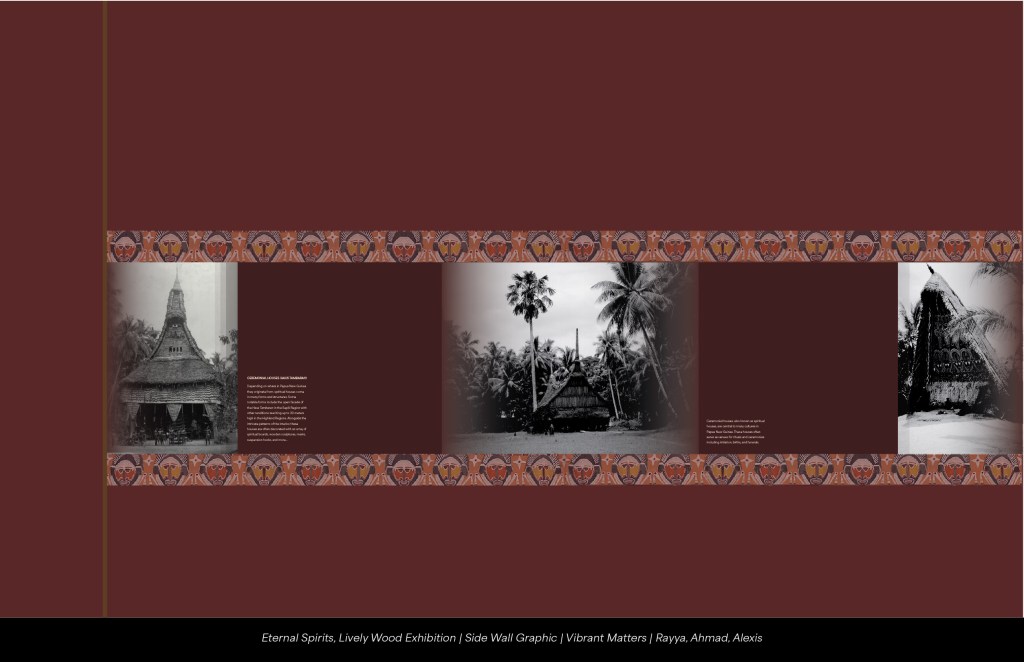
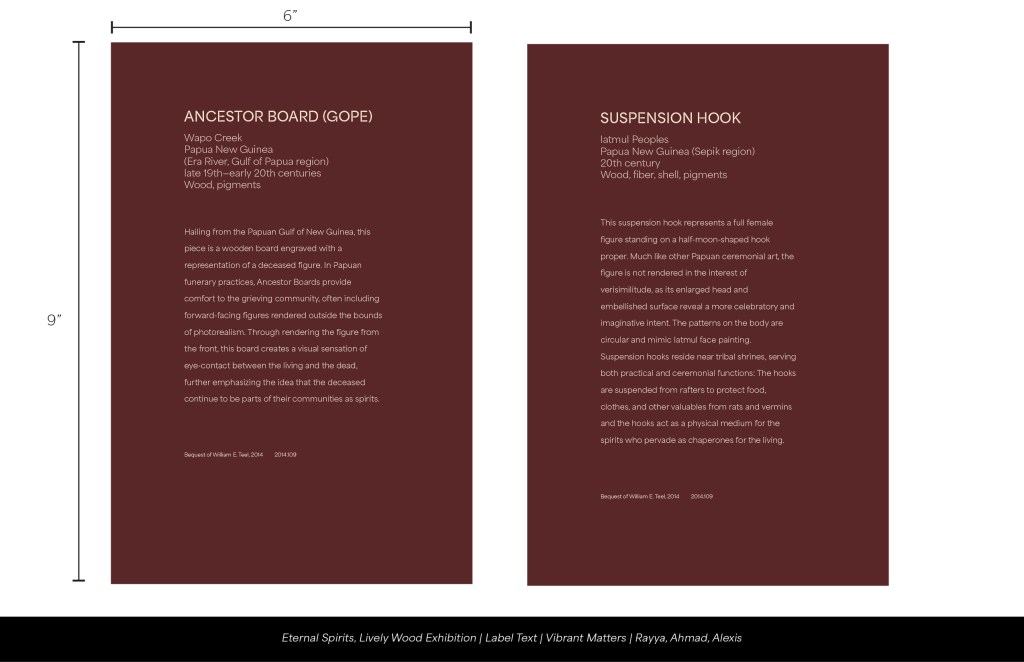
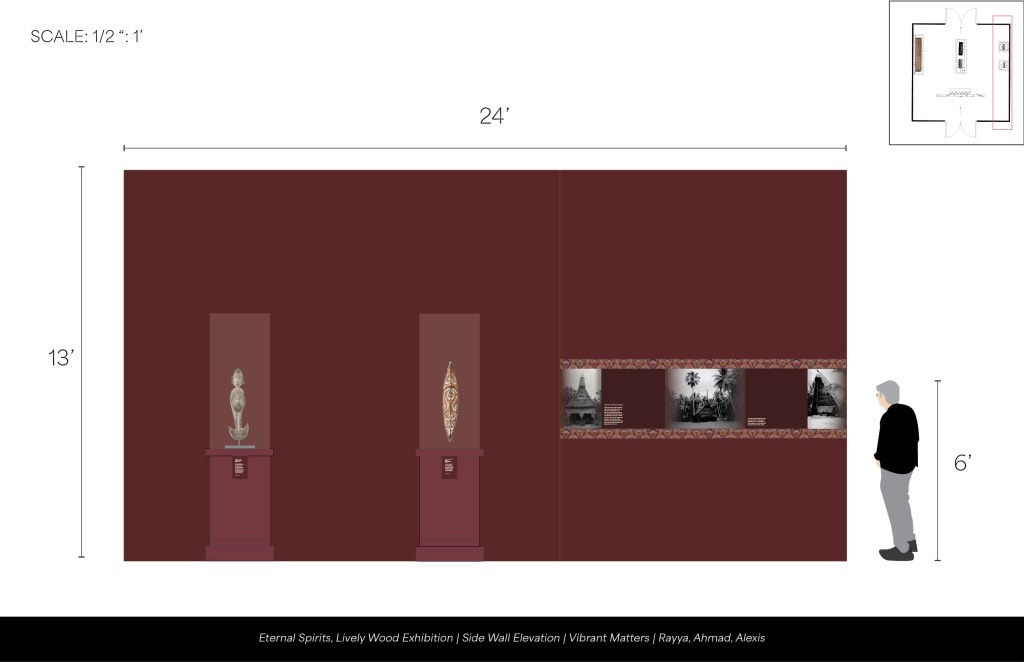
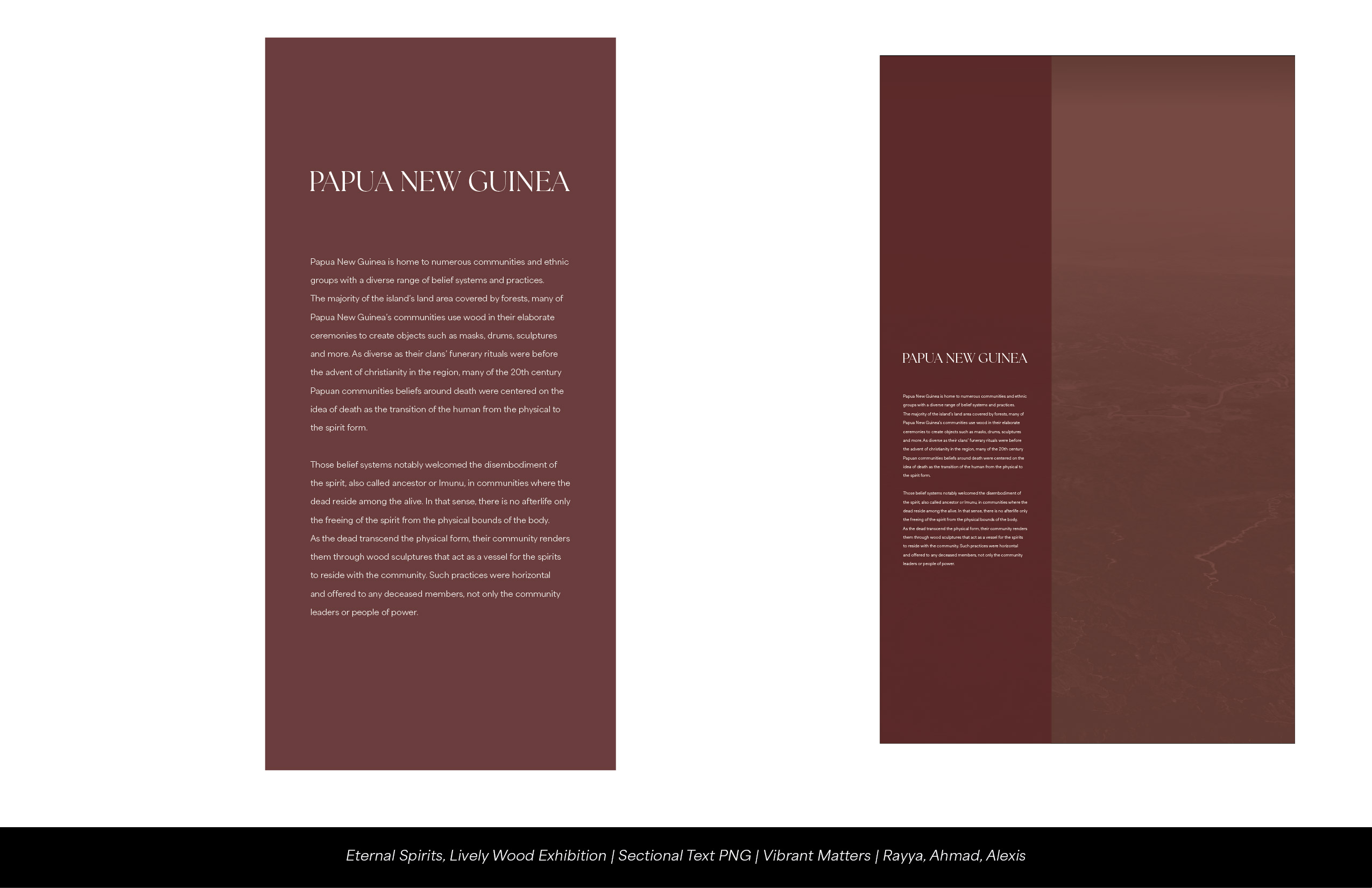
If you choose to follow the right path, the side wall didactic contextualizes the location of the suspension hook and gope, as it is found in spiritual houses (contingent on the location within Papua New Ginea).


The pedestal designs, though simplistic, works to showcase the artifacts while receding into the background. Inspirations for the pedestal come from preexisting pedestals within the MFA.